
Scout Essentials | Your Membership Award
From a small island to millions of Scouts around the world.
Did you know that Scouting began more than 100 years ago?
It started with a soldier, a book and a group of young people who wanted an adventure.
And here's something surprising. Young people helped start the Scout Movement themselves!
1. The soldier who became famous
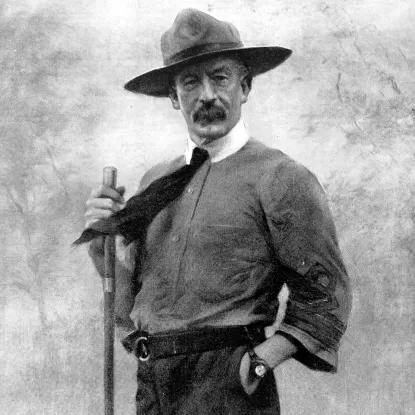
Robert Baden-Powell, often called B-P, was a soldier in the British Army.
In 1899, he was in a town called Mafeking in South Africa. A war was taking place, and enemy soldiers had surrounded the town.
For 217 days, the people inside Mafeking were trapped.
During this time, some local boys helped by carrying messages and doing other useful jobs. Baden-Powell saw how young people could take on responsibility and help others.
When the siege ended in May 1900, people across Britain celebrated. Baden-Powell became famous.
But he had no idea that he would soon help start something even bigger.
2. A book with an unexpected audience
Baden-Powell had written a book called Aids to Scouting.
It was written for soldiers and explained skills such as tracking, watching carefully, reading maps and finding your way.
But something unexpected happened.
Teachers and youth groups began using the book with young people.
Baden-Powell realised that these skills could be useful and exciting for children too.
He decided to try out his ideas.
3. The first Scout camp
In August 1907, Baden-Powell took 20 boys to Brownsea Island, just off the coast of Dorset in England.
They slept in tents, cooked outdoors, followed tracks, played games and learned to work together.
The boys were split into four Patrols:
- Bulls
- Curlews
- Ravens
- Wolves
Each Patrol had its own leader.
The boys were encouraged to make decisions, help each other and take responsibility.
The camp was a success!
Many of the things they did are still part of Scouting today.
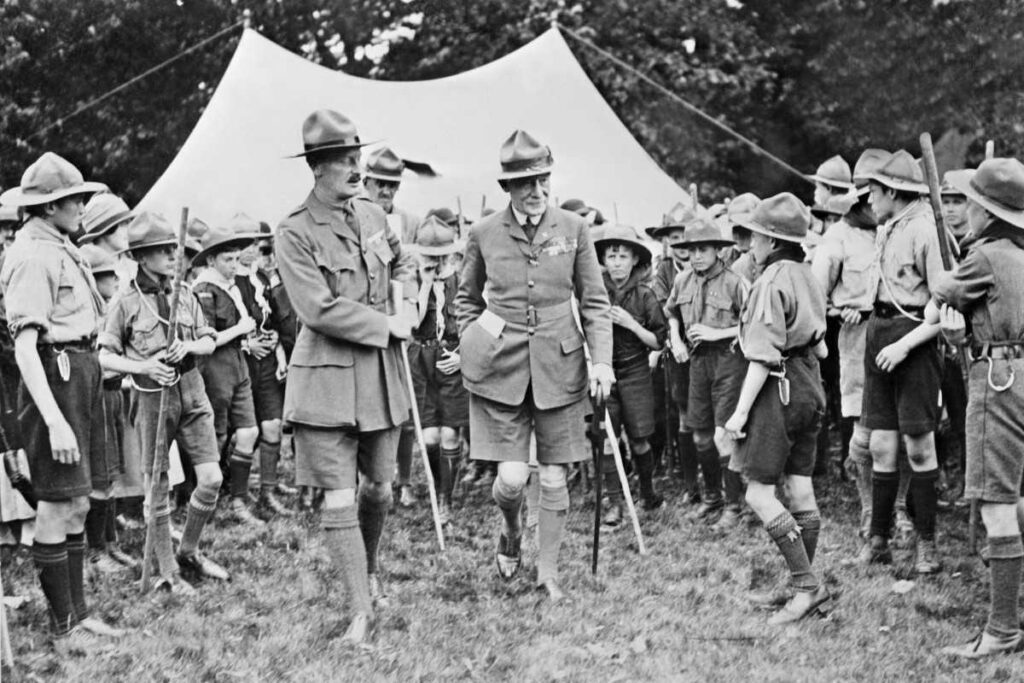
4. The book that started something big
In 1908, Baden-Powell published a new book called Scouting for Boys.
It was full of outdoor skills, games, challenges and ideas for adventures.
But there was a problem. Books could be expensive.
So instead of selling it as one big book, it first came out in six smaller parts.
A new part was sold every two weeks. Each part cost just four old pence.
This made it easier for young people to buy the book a little at a time.
And they loved it!
5. The Scouts who started themselves
Here's the really interesting part.
Baden-Powell hadn't planned to start a whole new organisation.
He thought groups that already existed would use his ideas.
But young people had other plans!
They read Scouting for Boys, got together with their friends and started their own Scout Patrols.
They tried the games, practised the skills and went on adventures.
Some even formed Patrols before the book was published.
At first, many of these Patrols had no adult leaders. The young people organised themselves and then found adults who could help.
Before long, Scout Patrols were appearing all over Britain.
Scouting grew so quickly that an organisation was needed to support them.
Scouting wasn't just started for young people. Young people helped start it themselves!
That's one of the most important things to remember about Scouting.
6. Scouting spreads around the world
Scouting soon spread to other countries.
Over the years, new sections were added for different ages. Girls also became part of the movement.
Today, millions of young people around the world enjoy Scouting.
They may speak different languages and live in very different places, but they share many of the same ideas.
They learn new skills, help others, work together and enjoy adventures.
And now you're part of that worldwide family too.
7. Our own piece of Scouting history
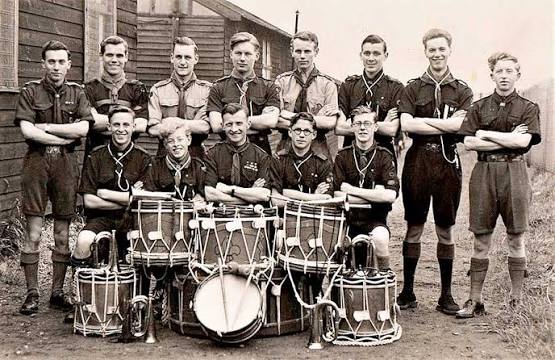
1st Washington Scouts was officially registered in 1916.
That makes us the oldest Scout Group in Washington!
Take a good look at the photograph at the top of this page.
These are Scouts from our Group, many years ago.
Look at their uniforms, their neckers and all those drums!
Here's something special.
We still have the big bass drum in the middle of the photograph.
The very same drum is still part of our Group's history today.
Think about all the Scouts who have been part of 1st Washington since 1916.
They have camped, explored, learned new skills, made friends and helped other people.
Now it's your turn.
You are part of that story too. What will your Scout adventures be?
Check your knowledge
You don't need to remember every date, but see if you can answer these questions.
- Why did Baden-Powell become famous?
- What useful jobs did young people do during the Siege of Mafeking?
- Where did the first experimental Scout camp take place?
- Why was Scouting for Boys sold in six smaller parts?
- How did young people help start the Scout Movement?
- When was 1st Washington Scouts officially registered?
Have a go!
Next time you're at Scout HQ, ask a leader if you can see the old bass drum.
Can you spot it in the photograph?
You've just discovered more than 100 years of Scouting history.